Special Agent Will Trent was abandoned at birth and endured a harsh coming-of-age in Atlanta's overwhelmed foster care system. Determined to make sure no one feels as he did, he now has the highest clearance rate.
**Score: 5/10 A Middling Procedural Hamstrung by an Unconvincing Premise**
*Will Trent* arrives with a unique hook: a Georgia Bureau of Investigation agent with severe dyslexia who solves crimes through pattern recognition, memory, and sheer force of will. On paper, it's an intriguing concept. In practice, the show struggles to make its central conceit believable, resulting in a watchable but deeply flawed procedural that earns a middling **5/10**.
**The Core Problem: An Unbelievable Premise**
I refuse to believe that someone could become the best homicide investigator in the force if their dyslexia was that bad that they literally couldn't read or write. This is the show's fundamental, crippling flaw.
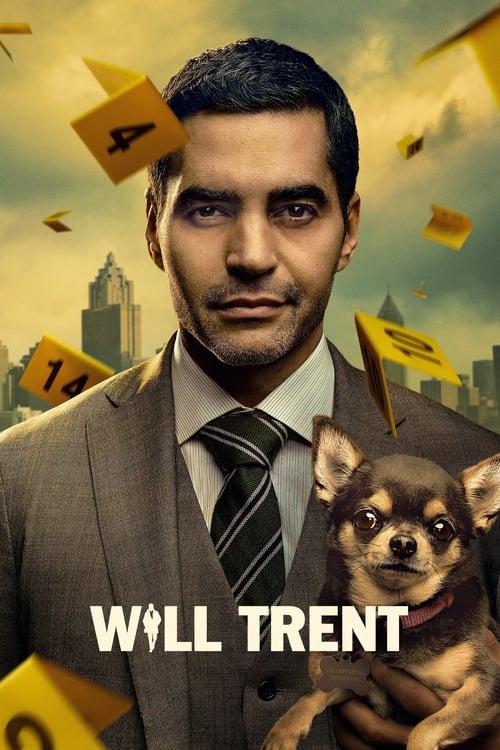
We are shown a character Will Trent (Ramón Rodríguez) who cannot read a report, cannot write a coherent sentence, and relies entirely on audio recordings and his partner to process written information. Yet we are also told he has the highest closure rate in the bureau and is considered an elite investigator. The cognitive dissonance is immense.
Policing, particularly homicide investigation, is a paper heavy profession. Affidavits, warrants, forensic reports, case files, legal statutes, interview transcripts these are not optional accessories; they are the tools of the trade. A detective who cannot independently review a search warrant application or read a suspect's prior statement is not a detective; they are a liability. The show attempts to work around this by giving Will a dedicated partner (Faith Mitchell, played by Iantha Richardson) who functions as his reader and scribe, but this only raises further questions about departmental liability and the sheer implausibility of his career trajectory.
Dyslexia is a real and challenging condition, and people with dyslexia achieve remarkable things every day. But the show presents Will's case as so severe that basic literacy is impossible, yet expects us to accept he has risen to the top of a literacy dependent field without any significant accommodation or oversight. It doesn't hold.
**The Formulaic Storytelling**
**The stories are too formulaic/predictable.** Each episode follows a rigid template: a body is discovered, Will notices something everyone else missed, he and Faith clash over methodology, they uncover a personal connection to the victim, and the killer is revealed in the final act. There are no genuine surprises. The "twists" are telegraphed so early that the show seems almost proud of its own predictability. For viewers who have watched any procedural drama in the last twenty years, *Will Trent* offers nothing new.
**The Plot Holes**
**The plot holes are huge and often just don't make sense.** Beyond the central premise, individual episodes are riddled with logical gaps. Suspects confess because Will stared at them intensely. Crucial evidence appears exactly when needed, with no plausible chain of custody. Characters make decisions that serve the plot, not their established personalities. The show prioritises momentum over coherence, and the result is a series that collapses under even gentle scrutiny.
**The Strengths (Such as They Are)**
To be fair, the show is not without merits. Ramón Rodríguez is genuinely charismatic, and he works hard to sell Will's combination of awkwardness, intensity, and hidden vulnerability. The chemistry between Rodríguez and Iantha Richardson's Faith is believable, and their banter provides the show's most consistent pleasure. The Atlanta setting is used effectively, offering a departure from the usual New York/LA procedural backdrops.
But these strengths are not enough to overcome the foundational issues.
**The Verdict**
*Will Trent* is a show that wants to be both a character study of a neurodivergent detective and a conventional network procedural. It succeeds at neither. The central premise is too strained to support the weight of the narrative, the cases are too predictable to engage, and the plot holes are too frequent to ignore. It is watchable in the way that many network procedurals are watchable as undemanding background noise. But for viewers who demand internal logic, believable character trajectories, and genuinely surprising mysteries, it will frustrate more than it entertains.
**Watch if:** You are a procedural completist, enjoy undemanding crime drama, or are willing to suspend an enormous amount of disbelief.
**Skip if:** You value logical consistency, believable workplace dynamics, or stories that respect the audience's intelligence. This show will test all three.
G
GenerationofSwine
1.0
I don't know where Will Trent is. My wife watches this, I read the novels and I've been looking for Will Trent for a few seasons now and he doesn't seem to show up. They have a character with his name, but that's not Will Trent. He doesn't look like the character readers know and love, and he certainly doesn't act like him.
I think what happened is ABC, and Disney looked at the novels and thought, "Will's too white, scared (literally and figuratively), athletic, and awkwardly loveable.... let's swap him out for someone more diverse and Mr. Beanish"
Credit where credit is due, they really don't drive home **_THE MESSAGE_** like so many other shows that have swapped out lead characters.... but this wasn't exactly your typical Netflix/Disney swap, if it were he would have been an obese lesbian Black woman. But he was still swapped, as were other characters, they still made it almost the opposite of the novels... but they don't constantly scream **_THE MESSAGE_**, and that is a redeaming factor.
It's watchable if you never picked up any of the books, but if you have, it's just insulting.
turkish123com is a discovery catalog and does not host, upload or embed unauthorized streams. Use this section for official provider references, legal where-to-watch context and platform links when provider integration is available.